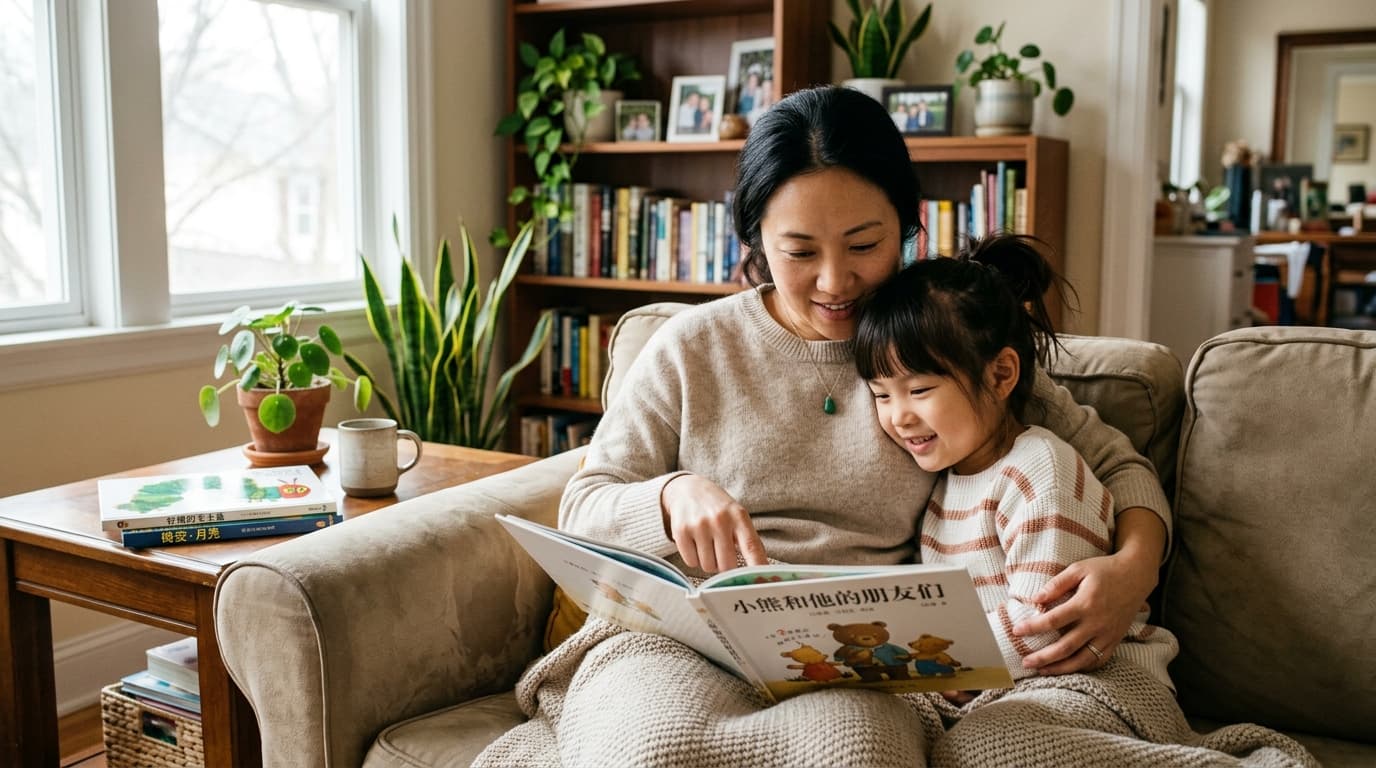
你想讓孩子讀中文書,但環顧家裡的書架,滿滿都是英文繪本。也許角落裡有一本親戚送的中文書,積了灰也沒人翻過。是不是很熟悉?
事實很簡單:孩子會讀他們看得到的書。如果中文書就擺在隨手可及的地方,融入日常生活的一部分,孩子自然而然就會拿起來翻。家庭中文圖書館不需要多大——它只需要存在,然後跟著孩子一起長大。
為什麼家裡需要中文書架
當中文書和英文書並排放在書架上時,你傳遞了一個重要的訊號:這個語言是正常的。它不是功課,不是每週六中文學校才需要面對的東西,而是我們家的一部分。
語言習得研究反覆證實,環境中的語言曝光至關重要。在家中能看到中文書、中文標籤的孩子,對中文閱讀有更積極的態度——甚至在他們獨立識字之前就是如此。一個小小的中文書架,比一疊閃卡更能激發孩子對中文的興趣。
目標不是完美,而是讓中文無處不在。客廳裡、床頭邊、車上都放幾本。孩子接觸得越自然,中文就越不會感覺像"外語"。
從五本書開始
不要想著一夜之間搭好一整個圖書館。從五本精挑細選的書開始,覆蓋不同的閱讀需求:
1. 小雞成長系列 — 日常生活詞彙的最佳入門。小雞去買菜、烤蛋糕、過節日。語言簡單重複,內容直接連線孩子的日常經驗。讀完還可以帶著孩子一起照著做,邊做邊說中文。
2. 包姆與凱羅 — 這套源自日本的繪本在亞洲廣受喜愛,每一頁都藏滿了小細節等著孩子去發現。孩子會一讀再讀,每次都能找到新東西。純粹的閱讀快樂,零壓力。
3. 勇敢小火車 — 臺灣原創繪本,講一輛害怕黑隧道的小火車如何找到勇氣。這本書提供了珍貴的情感詞彙——害怕、勇敢、鼓勵——這些詞很難透過日常對話自然習得。(更多關於勇氣與品格的中文童書推薦。)
4. 屁屁偵探繪本 — 沒錯,主角是一個臉長得像屁股的偵探。孩子們為之瘋狂。解謎的形式讓他們全程投入,讀完一遍馬上要求再讀一遍。有時候最好的中文書,就是孩子放不下的那本。
5. 14只老鼠 — 十四隻老鼠一起經歷四季變化。插畫美得令人屏息,自然相關的詞彙極為豐富——晨露、落葉、月光。這套書讓你慢下來,用最美的方式感受中文。
按年齡選書指南
有了入門書之後,以下是隨著孩子成長擴充書單的建議(每個年齡段的詳細書評,請參考我們的各年齡段中文童書完整指南):
0-3歲:硬頁書與重複
這個階段,書的耐用度跟內容一樣重要。選擇硬頁書(board book),文字簡單、重複性高。小雞系列和小企鵝系列都非常適合。不用擔心孩子是否"聽懂"——他們正在吸收中文的韻律、聲調和語感。同一本書讀五十遍不是無聊,而是學習。
3-5歲:繪本的黃金年代
這是最甜蜜的階段。孩子能跟上故事情節,指著圖畫說話,開始認出一些漢字。大量購入繪本吧:野貓軍團帶來幽默和食物詞彙,麵包小偷有讓人無法抗拒的畫風和搞笑劇情,大排長龍帶來社羣和飲食文化,100層樓的家則有數數、動物和無窮的想象力。
這個年齡段,數量很重要。孩子接觸的種類越豐富,詞彙量就越大。不要怕買"太簡單"的書——簡單的書培養自信和流利度。
5-7歲:橋樑書
孩子已經準備好讀更長的故事了。小修與沃特講述兩個好朋友的溫暖日常,篇幅接近章節書。屁屁偵探讀本從繪本版升級,有了真正的推理情節。佐羅力帶來冒險和幽默,文字量剛好足夠鍛鍊閱讀能力。
這也是孩子開始對閱讀有自己想法的年紀。尊重他們的選擇。一個自己挑中文書讀的孩子,正在建立用中文閱讀的身份認同。
7-12歲:獨立閱讀起飛
漫畫是這個階段的秘密武器。達克比辦案用偵探故事教真正的科學知識。爆笑科學王讓STEM主題變得有趣好懂。萌漫大話西遊記則透過孩子喜愛的漫畫形式,連線經典中國文學。
不要對漫畫有偏見。一個主動拿起中文漫畫獨立閱讀的孩子,正在做一件了不起的事——他們在選擇用母語閱讀來獲得快樂。
去哪裡買中文書
最佳購書渠道取決於你住在哪裡,但以下是通用策略:
- 網上中文書店通常選擇最多,很多支援國際配送。搜尋專營童書的店家。
- 當地中文書店讓孩子親自瀏覽和挑選,這對閱讀動力有巨大的推動作用。留意華人社羣或文化中心附近的書店。
- 圖書館預約免費且讓你在購買前先試讀。很多圖書館系統可以透過館際互借調來中文書。
- 二手轉讓群組是寶藏。孩子長得快,很多家庭樂意把讀過的書傳給下一個家庭。
不用糾結於打造"完美"書單。哪怕只有幾本書,定期輪換,也能維持一個閱讀習慣。
讓書成為日常的一部分
有書是一回事,讓它融入家庭節奏是另一回事。
建立閱讀例行。哪怕每天睡前只讀十分鐘中文書,也能養成習慣。不一定要跟英文閱讀時間分開——可以交替進行,或者讓孩子自己選。
讓孩子做主。強迫閱讀比什麼都更快地扼殺興趣。如果孩子想第二十遍讀屁屁偵探,而不是你買的那本"教育意義豐富"的書,就隨他吧。重複就是學習,快樂就是學習。
大方地重讀舊書。重讀是孩子內化語言規律的方式。讀到第五遍,他們開始跟著念;讀到第十遍,他們開始認字;讀到第二十遍,他們能"讀"給弟弟妹妹聽了。
把書和生活連線起來。做了煎餅?拿出《小雞過生日》。外面下雨了?讀《14只老鼠的搖籃曲》。當書和真實體驗產生連線時,語言才真正紮根。
你的起點
如果面對這麼多選擇感到不知所措,我們整理了一份按年齡和類別分類的書單推薦,幫你輕鬆入門。把它當作選單而不是任務清單——挑你家孩子會喜歡的,從那裡開始就好。
最重要的一步不是找到完美的書,而是把任何一本中文書放在孩子伸手就能夠到的地方,然後讓好奇心自己發揮作用。從一本開始,然後兩本、三本。不知不覺間,你就有了一個圖書館。
You want your child to read Chinese. But when you look at your bookshelf at home, it's all English. Maybe a lone Chinese picture book from a well-meaning relative sits untouched in a corner. Sound familiar?
Here's the thing: kids read what they see. If Chinese books are visible, accessible, and woven into the fabric of daily life, children are far more likely to pick them up on their own. A home Chinese library doesn't need to be massive. It just needs to exist — and grow with your child.
Why a Home Library Matters
When Chinese books live alongside English ones on your shelves, you send a powerful message: this language is normal. It's not homework. It's not something we only do at Chinese school on Saturdays. It's just... part of our house.
Research on heritage language development consistently shows that environmental exposure matters. Children who see books, labels, and print in their heritage language develop stronger literacy attitudes — even before they can read independently. A small Chinese bookshelf does more for language motivation than a stack of flashcards ever will.
The goal isn't perfection. It's presence. Chinese books in the living room, by the bed, in the car. The more your child encounters them naturally, the less "foreign" the language feels.
Start Small: Your First 5 Books
Don't try to build a library overnight. Start with five well-chosen books that cover different needs:
1. 小雞成長系列 (Little Chick Series) — Daily life vocabulary at its best. Little Chick goes shopping, bakes a cake, celebrates holidays. The language is simple, repetitive, and directly connected to things your child already does. Perfect for reading aloud and then doing the activity together.
2. 包姆與凱羅 (Baum & Kero) — These Japanese-origin picture books are beloved across Asia for a reason. Every page is packed with tiny details to discover. Kids will want to read them again and again, and they'll notice something new each time. Pure reading joy with zero pressure.
3. 勇敢小火車 (Brave Little Train) — A Taiwanese original about a little train who's scared of the dark tunnel but finds courage along the way. This book gives children emotional vocabulary — words for fear, bravery, and encouragement — that's hard to teach through conversation alone. (See more Chinese books about courage and character.)
4. 屁屁偵探繪本 (Butt Detective Picture Books) — Yes, it's about a detective whose face looks like a butt. Kids are obsessed. The mystery format keeps them engaged, and they'll beg you to read it again. Sometimes the best Chinese book is simply the one your child won't put down.
5. 14隻老鼠 (14 Mice Series) — Fourteen mice living together through the seasons. The illustrations are breathtaking, and the nature vocabulary is rich — words for morning dew, autumn leaves, moonlit nights. These books slow you down in the best way.
Growing by Age
Once you have your starter set, here's how to expand as your child grows. (For detailed reviews of every title by age group, see our complete Chinese book guide by age.)
Ages 0-3: Board Books and Repetition
At this stage, durability matters as much as content. Look for board books with simple, repetitive text. Series like 小雞 (Little Chick) and 小企鵝 (Little Penguin) work beautifully. Don't worry about whether your child "understands" — they're absorbing rhythm, tone, and the sounds of Chinese. Read the same book fifty times. That's not boring; that's learning.
Ages 3-5: The Golden Age of Picture Books
This is the sweet spot. Your child can follow a story, point at pictures, and start recognizing characters. Load up on picture books: 野貓軍團 (Wild Cat Army) for humor and food vocabulary, 麵包小偷 (Bread Thief) for its irresistible art and silly plot, 大排長龍 (The Long Queue) for community and food culture, and 100層樓的家 (The 100-Story House) for counting, animals, and sheer wonder.
At this age, quantity helps. The more variety your child encounters, the richer their vocabulary becomes. Don't be afraid to buy books that seem "too easy" — easy books build confidence and fluency.
Ages 5-7: Bridge Books
Your child is ready for longer stories with more text per page. 小修與沃特 (Xiu and Watt) offers gentle chapter-like stories about two friends. 屁屁偵探讀本 (Butt Detective Chapter Books) steps up from the picture book versions with real mystery plots. 佐羅力 (Zorori) brings adventure and humor with just enough text to stretch their reading muscles.
This is also when kids start having opinions about what they read. Let them. A child who chooses their own Chinese book is a child who's building a reading identity in that language.
Ages 7-12: Independent Reading Takes Off
Comics and manga are your secret weapon here. 達克比辦案 (Darkbie's Cases) teaches real science through detective stories. 爆笑科學王 (Hilarious Science King) makes STEM topics accessible and fun. 萌漫大話西遊記 (Journey to the West Manga) connects kids to classic Chinese literature through a format they love.
Don't be snobbish about comics. A child reading a Chinese comic independently is doing something remarkable — they're choosing to read in their heritage language for fun.
Where to Buy Chinese Books
The best source depends on where you live, but here are general strategies:
- Online Chinese bookstores often have the widest selection and ship internationally. Search for stores that specialize in children's books.
- Local Chinese bookshops let your child browse and choose, which is powerful for motivation. Check Chinatown areas or cultural centers.
- Library holds are free and let you test before you buy. Many library systems can order Chinese books through interlibrary loan.
- Secondhand groups on social media are goldmines. Kids outgrow books quickly, and other families are often happy to pass them along.
Don't stress about building the perfect collection. Even a few books, rotated regularly, can sustain a reading habit.
Making Books Part of Daily Life
Having books is one thing. Making them part of your family's rhythm is another.
Create a reading routine. Even ten minutes of Chinese reading before bed establishes a habit. It doesn't have to be separate from English reading time — just alternate, or let your child choose.
Let your child pick. Forced reading kills motivation faster than anything. If your child wants to read 屁屁偵探 for the twentieth time instead of the "educational" book you bought, let them. Repetition is learning. Joy is learning.
Reread favorites shamelessly. Rereading is how children internalize language patterns. The fifth reading is where they start mouthing along. The tenth is where they recognize characters. The twentieth is where they "read" it to a younger sibling.
Connect books to real life. Made pancakes? Pull out 小雞過生日. Raining outside? Read 14隻老鼠的搖籃曲. When books connect to lived experience, the language sticks.
Your Starting Point
If you're feeling overwhelmed by all the options, we've put together a curated booklist by age and category to help you get started. Think of it as a menu, not a mandate — pick what appeals to your family and go from there.
The most important step isn't finding the perfect book. It's putting any Chinese book within your child's reach and letting curiosity do the rest. Start with one. Then two. Before you know it, you'll have a library.